Quick answer
kW measures power; kWh measures energy delivered or used over time. A system’s rated kW is not its daily or annual electricity production. Capacity factor compares generation over a period with continuous operation at the stated power rating. For batteries, check both energy capacity in kWh and output power in kW. (eia.gov)
When comparing proposals, ask for three separate answers: How much electricity will the system generate? How much power can it supply at once? How much stored energy can you actually use?
The examples below use published equipment specifications and clearly labeled calculation assumptions. Equipment ratings illustrate how to read the numbers—not which products to buy. U.S. equipment documentation provides examples, but the unit conversions apply anywhere.
What kW and kWh tell you
A kilowatt, abbreviated kW, is a unit of power: the rate at which electricity is generated, supplied, or consumed. One kilowatt equals 1,000 watts. A kilowatt-hour, abbreviated kWh, is a quantity of energy. One kWh is the energy supplied by one kW maintained for one hour. (eia.gov)
For constant power:
Energy (kWh) = power (kW) × time (hours)
For example, a hypothetical load drawing a steady 2 kW for three hours consumes:
2 kW × 3 hours = 6 kWh
If power changes, calculate the energy for each interval and add those amounts. Do not multiply a brief maximum reading by an entire day.
| Number in a proposal | What it describes |
|---|---|
| Solar array capacity, kW DC | Panel power rating under specified test conditions |
| Inverter capacity, kW AC | Inverter power rating |
| Annual generation, kWh/year | Electricity generated over a year |
| Battery energy capacity, kWh | Stored-energy capacity |
| Battery output, kW | Rate at which the battery system can supply electricity |
Solar documentation distinguishes DC array capacity from AC inverter capacity; storage documentation separately identifies energy and power capacity. These numbers answer different questions and should not be compared as though they were interchangeable. (samrepo.nlr.gov)
Capacity factor connects rated power with generation
Capacity factor is electricity generated during a period divided by the electricity that continuous operation at the stated power rating would have produced during that same period. That is the definition used by the U.S. Energy Information Administration. (eia.gov)
For a 365-day year:
Capacity factor = annual generation (kWh) ÷ [rated power (kW) × 8,760 hours]
Multiply the result by 100 to express it as a percentage. For a leap year, use 8,784 hours.
Capacity factor is not conversion efficiency. It describes generation relative to a power rating across time—not the proportion of sunlight or wind energy converted into electricity. Nor does a 20% capacity factor mean a system produces exactly 20% of rated power every hour.
Always identify the denominator. For solar, a calculation based on panel DC capacity can differ from one based on inverter AC capacity, even when both use the same annual AC energy output. Solar modeling documentation explicitly distinguishes those capacities. (samrepo.nlr.gov)
Use capacity factor to check an estimate’s arithmetic. Do not treat it as a substitute for the resource assessment that produced the estimate.
Solar example: a panel rating is not a daily yield
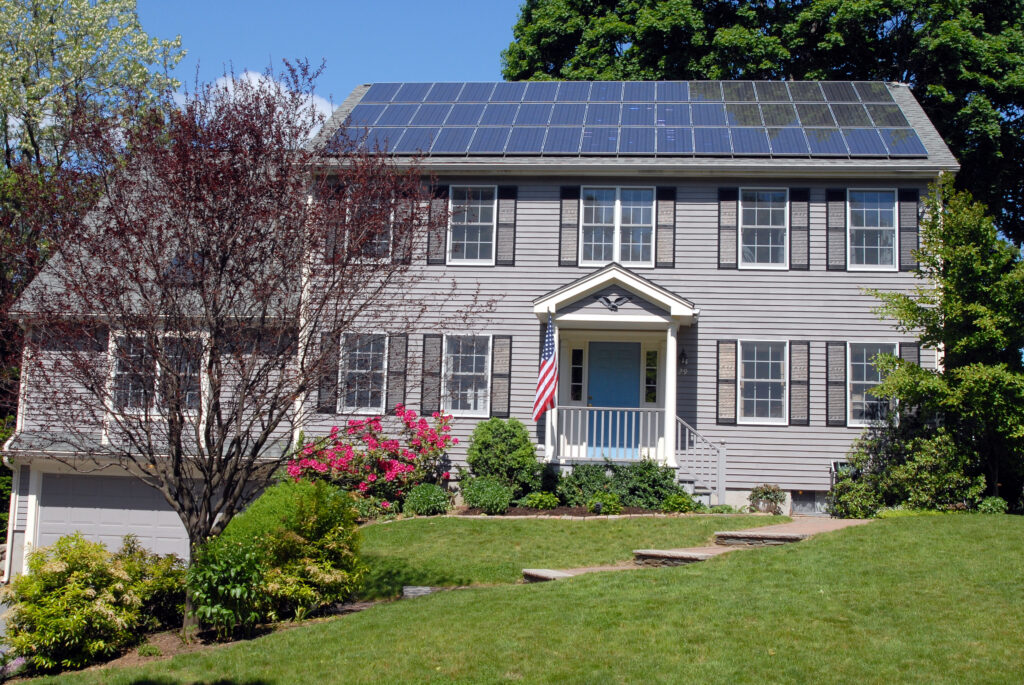
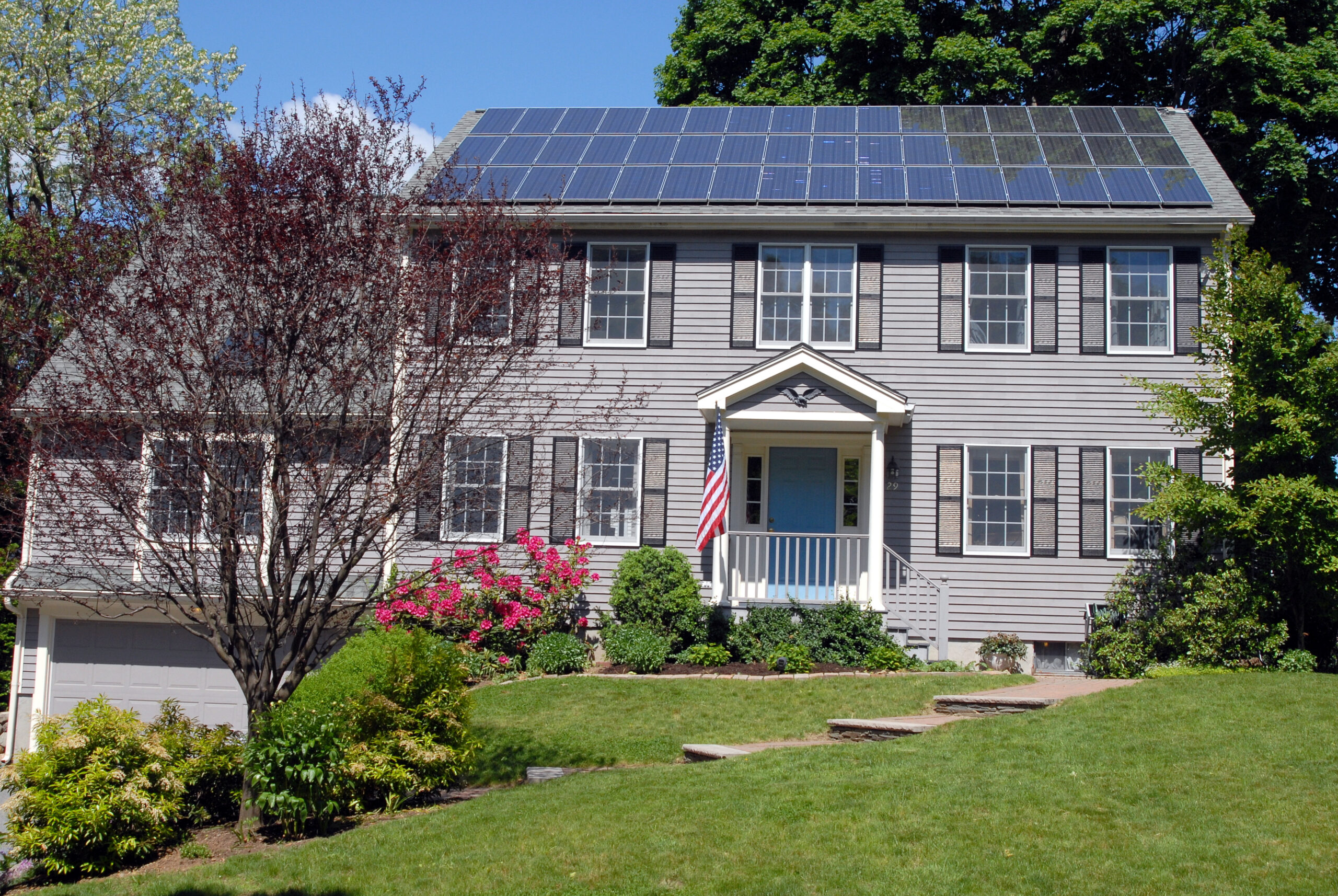
Solar panel ratings describe performance under defined conditions. REC’s published Alpha Pure-R datasheet, for example, lists a 400 W panel class under standard test conditions, including irradiance of 1,000 W/m² and a temperature of 25°C. The same panel class is listed at 305 W under the datasheet’s different nominal module operating temperature conditions. Neither figure is daily energy production. (recgroup.com)
Worked example using those published ratings
Assume an illustrative array contains 15 panels from that 400 W class:
- Nameplate array capacity: 15 × 400 W = 6,000 W = 6 kW DC
- Sum of the listed 305 W operating-condition outputs: 15 × 305 W = 4,575 W = 4.575 kW DC
- If that second output were maintained for exactly one hour: 4.575 kW × 1 hour = 4.575 kWh DC
The panel count and one-hour duration are calculation assumptions. This is not a measured installation, a daily forecast, or electricity delivered to household AC circuits. It shows why a 6 kW label cannot, by itself, answer “How many kWh will I get?”
For a useful annual estimate, request the location and weather dataset, roof or ground-array orientation, tilt, shading assessment, equipment configuration, and loss assumptions. PVWatts documentation identifies system capacity, array orientation, and losses as model inputs; its results distinguish DC array energy from AC system energy. (samrepo.nlr.gov)
Practical check: Confirm whether the quoted annual kWh are AC output after modeled losses. Also ask for monthly results rather than relying only on an annual total.

Small-wind example: read the wind speed beside the rating
A wind turbine’s power rating needs its associated wind speed. Annual energy also needs assumptions about how often different wind speeds occur.
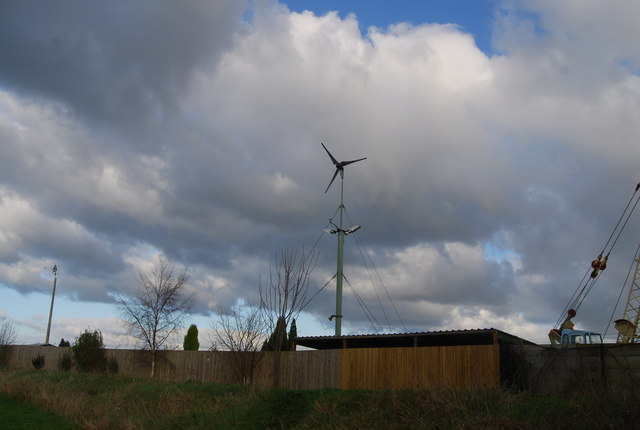
A published ICC-SWCC certificate for the Bergey Excel 10 lists:
- 8.9 kW rated power at 11 m/s
- 13,800 kWh/year rated annual energy under standardized assumptions: 5 m/s average wind speed, a specified wind-speed distribution, sea-level air density, and 100% availability.
These are documented comparison ratings, not a forecast for an arbitrary property. (smallwindcertification.org)
Worked capacity-factor calculation
Using 8.9 kW as the reference rating:
13,800 kWh ÷ (8.9 kW × 8,760 hours) ≈ 0.177
That is about 17.7% relative to that particular rating and standardized annual-energy figure. It does not mean the turbine operates steadily at 17.7% of rated power.
DOE’s Small Wind Guidebook explains that an energy estimate should account for the turbine’s power curve, wind resource, tower height, site characteristics, wind-speed frequency distribution when available, and elevation. (energy.gov)
Practical check: Ask where the wind data came from and how they were adjusted to the proposed rotor height. A product name containing “10,” a windy afternoon, or a broad regional wind map is not an annual-energy estimate.

Generation losses: check where the electricity is counted
A production estimate needs a measurement boundary: the point in the system where electricity is counted.
For solar, PVWatts identifies losses associated with shading, dirt, snow, module mismatch, wiring, connections, and system availability. Its documentation also distinguishes DC array capacity from inverter capacity and models inverter efficiency separately. (pvwatts.nlr.gov)
Ask the proposer to distinguish:
- Array DC energy: electricity produced before DC-to-AC conversion.
- System AC energy: electricity after the modeled conversion and relevant losses.
- Energy delivered through storage: electricity that has also passed through charging and discharging.
Storage does not return every unit of electricity put into it; conversion and retrieval involve losses. It changes when electricity can be used rather than creating additional renewable energy. (energy.gov)
Two mistakes deserve special attention:
Subtracting losses twice. If annual AC production already includes inverter and wiring losses, applying them again understates the forecast.
Using one blanket percentage without explanation. Ask which losses are included, which are modeled separately, and which site-specific effects remain unassessed.
For a hybrid solar-wind system, request separate generation estimates before combining them. Keep battery charging and discharging separate from the original generation totals so the same electricity is not counted twice.
Battery example: stored kWh and output kW are separate limits
Battery sizing has two questions:
- Can it supply the simultaneous loads? Check output power in kW.
- How long can it supply them? Check available energy in kWh.
DOE describes these as separate storage characteristics. (energy.gov)
Also distinguish total or nominal capacity from usable capacity. Usable capacity accounts for the permitted discharge range. Depth of discharge describes how much of the battery’s capacity is discharged. Round-trip efficiency compares energy delivered during discharge with energy used during charging; it is not another name for capacity. (yourhome.gov.au)
Published terminology varies, so read the specification and its footnotes. Tesla’s 2025 U.S. Powerwall 3 datasheet lists 13.5 kWh AC nominal battery energy and several nominal AC output configurations, including 11.5 kW. The energy-rating footnote specifies beginning-of-life conditions at 25°C and 3.3 kW charge/discharge power. (energylibrary.tesla.com)
Worked runtime calculation
Assume a full unit can make all 13.5 kWh of that rated AC energy available to a steady 3.3 kW load, with no recharging:
13.5 kWh ÷ 3.3 kW ≈ 4.1 hours
This is arithmetic under stated assumptions, not a guaranteed outage duration. EIA similarly calculates storage duration as energy capacity divided by power capacity. (eia.gov)
Before using that result for planning, verify starting charge, any energy intentionally left unused, temperature conditions, battery age, and the actual load profile. Check continuous output and motor-starting capability separately. Do not assume a high kW rating means long runtime, or automatically multiply an AC energy rating by round-trip efficiency again.
A proposal-checking routine you can actually use
Make a one-page comparison sheet before comparing prices. Request these entries from every proposer:
For solar
- Panel count, model, and total kW DC.
- Inverter model and kW AC rating.
- Annual and monthly AC generation.
- Location, weather-data source, orientation, shading, and included losses.
Those items let you connect the equipment ratings with the model inputs and energy outputs. (samrepo.nlr.gov)
For small wind
- Exact turbine and power curve.
- Proposed rotor height.
- Wind-resource evidence and height adjustment.
- Annual energy, availability assumptions, and site-specific adjustments.
DOE identifies these resource and siting factors as inputs to a credible small-wind estimate. (energy.gov)
For storage
- Rated and usable kWh, with the AC or DC boundary identified.
- Continuous output, charging power, and starting-load capability.
- Energy available under your intended operating settings.
- Specification test conditions and capacity-retention terms.
Storage energy and power ratings answer different questions, while usable capacity and efficiency need their own definitions. (energy.gov)
Finally, run three checks yourself:
- Units: Does every generation claim include a time period?
- Arithmetic: Does the reported capacity factor match the stated kWh and power-rating basis?
- Timing: Does the estimate describe when energy is available, not just how much exists in a year?
Matching annual generation to annual consumption is not proof of continuous self-sufficiency. Storage is specifically used to move energy between times of generation and demand, and it has finite energy and power limits. (energy.gov)
The most useful proposal is not simply the one with the largest kW label. It is the one that makes its expected kWh, operating conditions, losses, storage limits, and uncertainties clear enough for you to check.