Quick answer
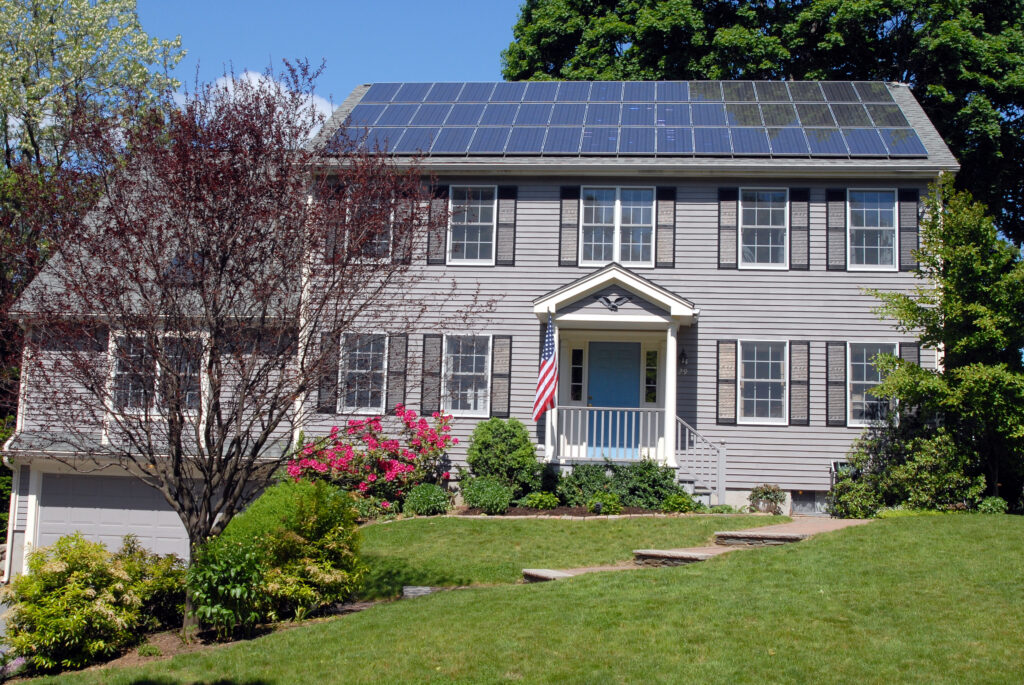
Start with rooftop solar if you own the property and have a sound, reasonably unshaded roof. Compare ground-mounted solar if your roof is unsuitable but you have usable, sunny land. Consider community solar if you rent, cannot host panels, or prefer a subscription instead of an installation. Community solar usually provides utility-bill credits rather than panels at your home. The best choice depends on site suitability and contract terms—not simply which option accommodates the most panels. (energy.gov)
This guide focuses on U.S. grid-connected solar. Maryland provides the community-solar and local-planning examples; those rules should not be assumed to apply elsewhere. Maryland program details were checked on October 6, 2026.
1. Screen your property before requesting proposals
Gather your electricity bills and property information before discussing equipment. DOE recommends reviewing annual and seasonal electricity use, roof condition, shading, and changes such as adding an electric vehicle. (energy.gov)
Use this preliminary checklist:
- Property control: Do you own the roof or land? If not, ask what permission an installation would require.
- Roof condition: Is replacement or structural work likely before installing panels?
- Shade: Which roof areas and potential ground locations are shaded? Ask for an assessment rather than judging from one sunny afternoon.
- Usable space: Identify roof obstructions and ground areas you need for other purposes.
- Electricity demand: Collect 12 months of bills. Note planned equipment, efficiency improvements, or business-use changes.
- Moving plans: Ask how selling or moving affects ownership, financing, or subscription obligations.
- Approvals: Check the responsible permitting authority, utility, and any homeowners’ association requirements. (energy.gov)
Mark each item confirmed, needs assessment, or not suitable. This keeps a preliminary sales estimate from becoming a decision before the property has been checked.
2. Separate panel location from the ownership arrangement
“Rooftop” and “ground-mounted” describe where panels go. Buying, borrowing, leasing, and subscribing describe how you pay and what you control. Compare these separately. DOE’s financing guidance distinguishes loans, leases, and power purchase agreements from a cash purchase. (energy.gov)
| Option and arrangement | What you own or receive | What to compare |
|---|---|---|
| Rooftop system purchased with cash or a loan | An on-property system you own | Roof suitability, installation price, financing, maintenance, and future roof work |
| Ground-mounted system purchased with cash or a loan | An on-property system you own | Land suitability, supporting structures, electrical connection, approvals, and maintenance |
| On-property solar lease, where offered | Use of a provider-owned system | Payments, increases, maintenance responsibilities, and end-of-contract terms |
| On-property power purchase agreement, where offered | Electricity purchased from a provider-owned system | Price per kilowatt-hour, price changes, contract length, and transfer terms |
| Community-solar subscription | A share of generation benefits, usually through bill credits | Eligibility, subscription charges, credit calculation, cancellation, and moving rules |
Leasing does not automatically lead to ownership. Neither does a power purchase agreement. Community subscriptions generally involve a recurring charge and utility credit; some community projects offer an ownership share instead, so establish exactly what is being sold. (home.treasury.gov)
Do not compare a purchase price directly with a subscription’s monthly payment. They represent different assets, obligations, and time periods.
3. Choose rooftop solar when the roof passes both checks
A roof needs to pass two tests: Can it support the installation, and will the proposed layout receive enough sunlight? DOE identifies roof age, tree cover, size, shape, slope, and direction as relevant factors. South-facing roofs typically perform well, but other orientations can also be suitable. (energy.gov)
Ask the installer to distinguish:
- Areas excluded because of shade or obstructions.
- Areas excluded because of structural or layout constraints.
- Roof repairs needed before installation.
- Assumptions behind the proposed energy estimate.
Get future roof-work responsibilities in writing. Ask who would remove and reinstall the array, how that work would be priced, and whether it affects warranties. These are contract questions, not reasons to assume every older roof must be replaced.
Illustrative shaded suburban home: Suppose a homeowner has mature trees around the house and little open yard. The sensible first step is a roof-condition and shade assessment—not a maximum-panel proposal. If no practical roof layout remains, investigate community solar. Ground mounting deserves consideration only if a separate ground location actually offers better conditions.
This is a decision example, not a documented installation or production forecast.

4. Choose ground-mounted solar when the land is genuinely usable
A sunny field or garden creates another siting possibility, but it is not automatically a buildable solar location. Supporting structures, foundations, electrical routing, and zoning must be assessed. DOE explains that solar modules need mounting structures capable of handling environmental loads. (energy.gov)
Request a site plan showing the proposed array, access, electrical route, and property boundaries. Ask the provider to identify possible conflicts with drainage, underground services, septic infrastructure, agricultural activity, and future buildings before finalizing the price.
Local planning example—Montgomery County, Maryland: The county’s residential photovoltaic guidelines, updated December 9, 2025, require ground-mounted plans to show compliance with zoned setbacks. They also describe foundations and supporting structures, a 10-foot clearance around ground-mounted installations, and noncombustible-base and security-barrier requirements. These provisions mean the usable area extends beyond the panels themselves. Confirm current requirements and their application to your parcel with the county. (montgomerycountymd.gov)
A setback is the required distance from a specified property boundary or right-of-way. Montgomery County’s zoning code includes solar-panel encroachment provisions, but those are not a substitute for determining the underlying setback applicable to the site. (codelibrary.amlegal.com)
Illustrative rural property: A property owner with a shaded house and an open area nearby should request both a ground-array assessment and an assessment of any suitable barn roof. Compare complete designs—not just panel prices. Neither option wins until the provider identifies the electrical work, approvals, and expected generation.
Do not assume ground mounting always costs more or produces more. Obtain site-specific proposals.
5. Use community solar when hosting panels is impractical
Community solar lets multiple customers benefit from a shared array. In the common subscription model, the project sends electricity to the grid, and subscribers receive credits associated with their allocated share. Panels do not need to be installed at the subscriber’s residence. (energy.gov)
Start with your utility or state program administrator. Ask which projects can serve your account and whether they are operating, accepting subscribers, or awaiting completion.
Maryland example: The Public Service Commission says renters may participate and describes eligibility through projects in the customer’s utility service territory. Moving within that territory can allow a subscription to continue at the new address. Verify eligibility and transfer arrangements for the specific offer. (psc.maryland.gov)
Maryland regulations require a completed Contract Summary Disclosure before or when the agreement is executed. Required contract information includes pricing, recurring and one-time charges, duration, transfer provisions, and early-termination conditions. Obtain both the disclosure and full agreement; do not rely on a salesperson’s savings summary. (regs.maryland.gov)
Program availability does not establish that a particular project has open capacity. Nor does it establish your subscription price.
6. Compare production and costs using matching assumptions
For rooftop and ground-mounted proposals, request the same comparison period and clearly documented assumptions. Include:
- Property location and weather/resource data.
- Proposed system capacity.
- Mounting type, direction, and tilt.
- Shade and other modeled losses.
- Monthly and annual estimated generation.
- Electricity-use assumptions.
- Utility rates and export-credit treatment.
- Complete installation and financing costs.
PVWatts can support a preliminary generation comparison, but its predictions contain assumptions and uncertainty. Its inputs include system size, array type, tilt, direction, and losses. Importantly, the default shading loss represents little or no shade; it is not evidence that a tree-shaded property has been assessed. (pvwatts.nlr.gov)
Ask providers to explain differences between estimates. A higher forecast might reflect a better location—or simply different modeling assumptions.
For an owned system, request separate prices for roof work, ground works, electrical upgrades, permits, and other exclusions. FTC guidance recommends detailed bids that specify installation costs, expected output, warranties, and any production guarantee. Ownership also brings maintenance responsibility unless the contract includes it. (consumer.ftc.gov)
For subscriptions, compare credits minus all subscription charges, not the advertised credit alone. For leases and power purchase agreements, inspect payment increases and end-of-contract provisions. (home.treasury.gov)
Keep incentives separate from the base comparison. Ask the administering agency to confirm current eligibility rather than accepting a sales assumption.
7. Work through a community-solar billing example
Maryland’s PSC says a low-to-moderate-income subscriber’s subscription rate cannot exceed 90% of the monetary value of the utility bill credit. Eligibility must be verified; this provision is not a universal discount for every subscriber or every state. (psc.maryland.gov)
Hypothetical illustration—not an offer or forecast:
| Item | Illustrative amount |
|---|---|
| Credit attributed to the subscription | $100 |
| Subscription charge at 90% of that credit | $90 |
| Difference, before any other applicable charges | $10 |
The calculation is:
$100 credit − $90 subscription charge = $10 difference.
This does not mean the household’s entire electricity bill falls by 10%. It shows the difference associated with that subscription credit.
Ask the provider to demonstrate the calculation using its actual agreement. Then reconcile the provider’s statement with the utility bill for the same generation period. Confirm billing timing, treatment of unused credits, and every additional charge. Maryland credits depend on allocated project generation and are applied under the utility’s billing arrangements. (regs.maryland.gov)
8. Check these mistakes before signing
Mistake: accepting the biggest array as the best proposal.
Check whether the design matches your electricity use and the utility’s treatment of exported electricity.
Mistake: treating an estimate as a guarantee.
Request the model assumptions and any separate contractual production guarantee.
Mistake: overlooking moving or roof-repair obligations.
Ask what happens when you sell, reroof, cancel, or transfer the agreement.
Mistake: signing under pressure.
Take time to review the documents and compare providers. Treasury’s consumer advisory warns about “free solar” claims and promotional payments that conceal higher later obligations. (home.treasury.gov)
Mistake: assuming solar provides outage backup.
Ordinary grid-connected solar generally shuts down when grid power fails. Backup requires an appropriately configured system; DOE describes storage and suitable inverter configuration as key components. A community-solar bill credit is not a household backup-power installation. (energy.gov)
Before signing, ask: Who owns the equipment? What is excluded from the price? Who obtains approvals? What maintenance is included? Can payments increase? What happens if generation falls or I move?
Your next step is a verified site assessment or a complete subscription disclosure—not an equipment order.